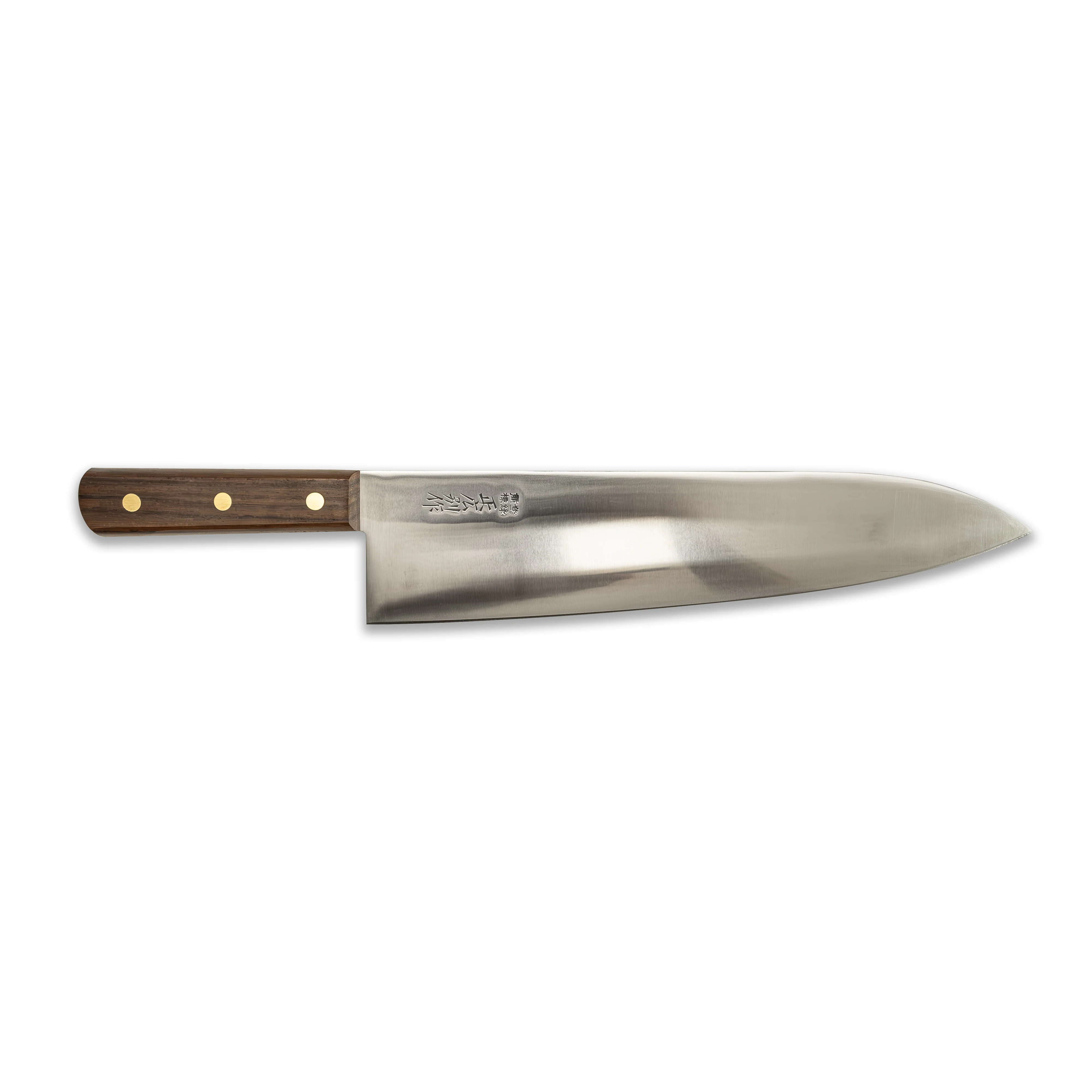
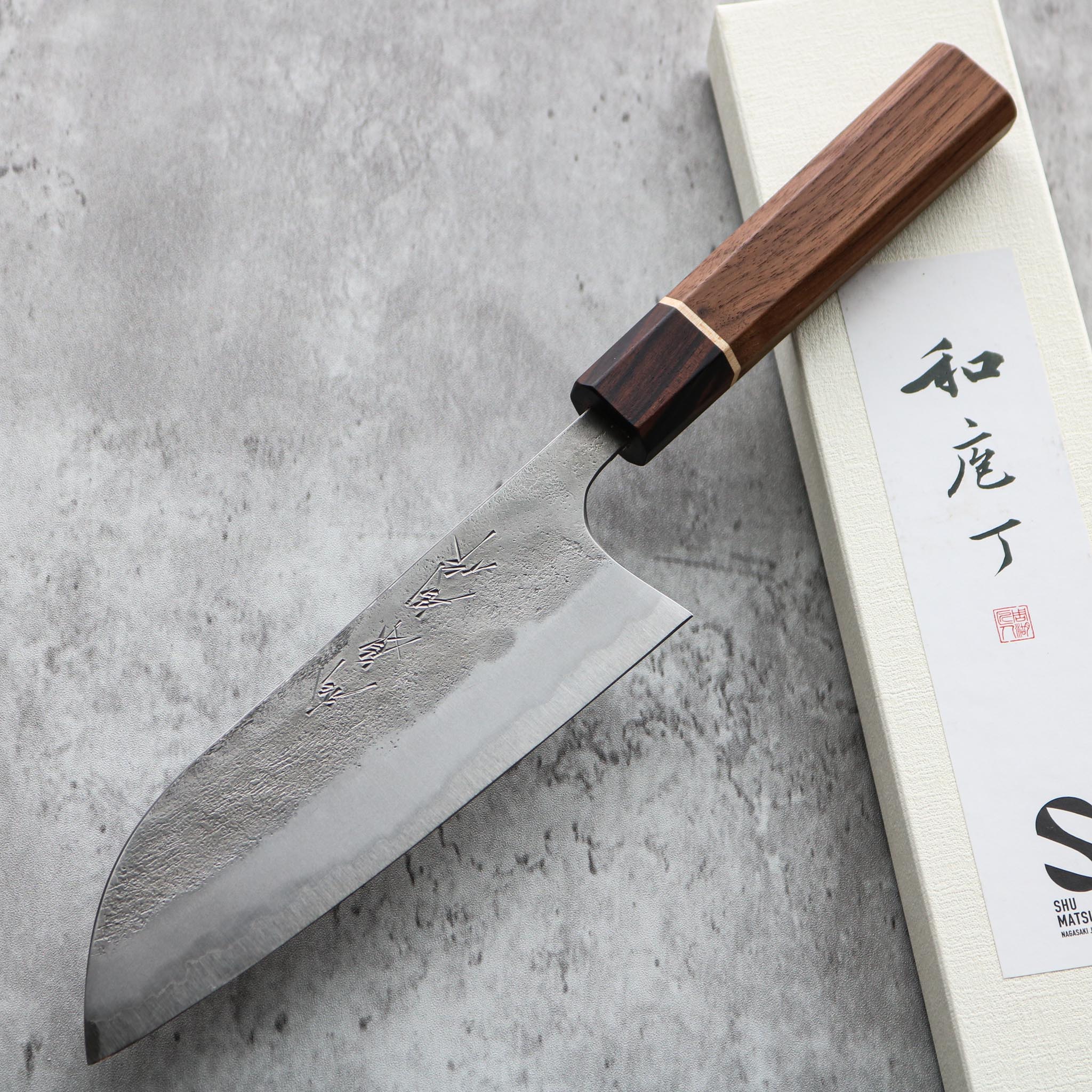
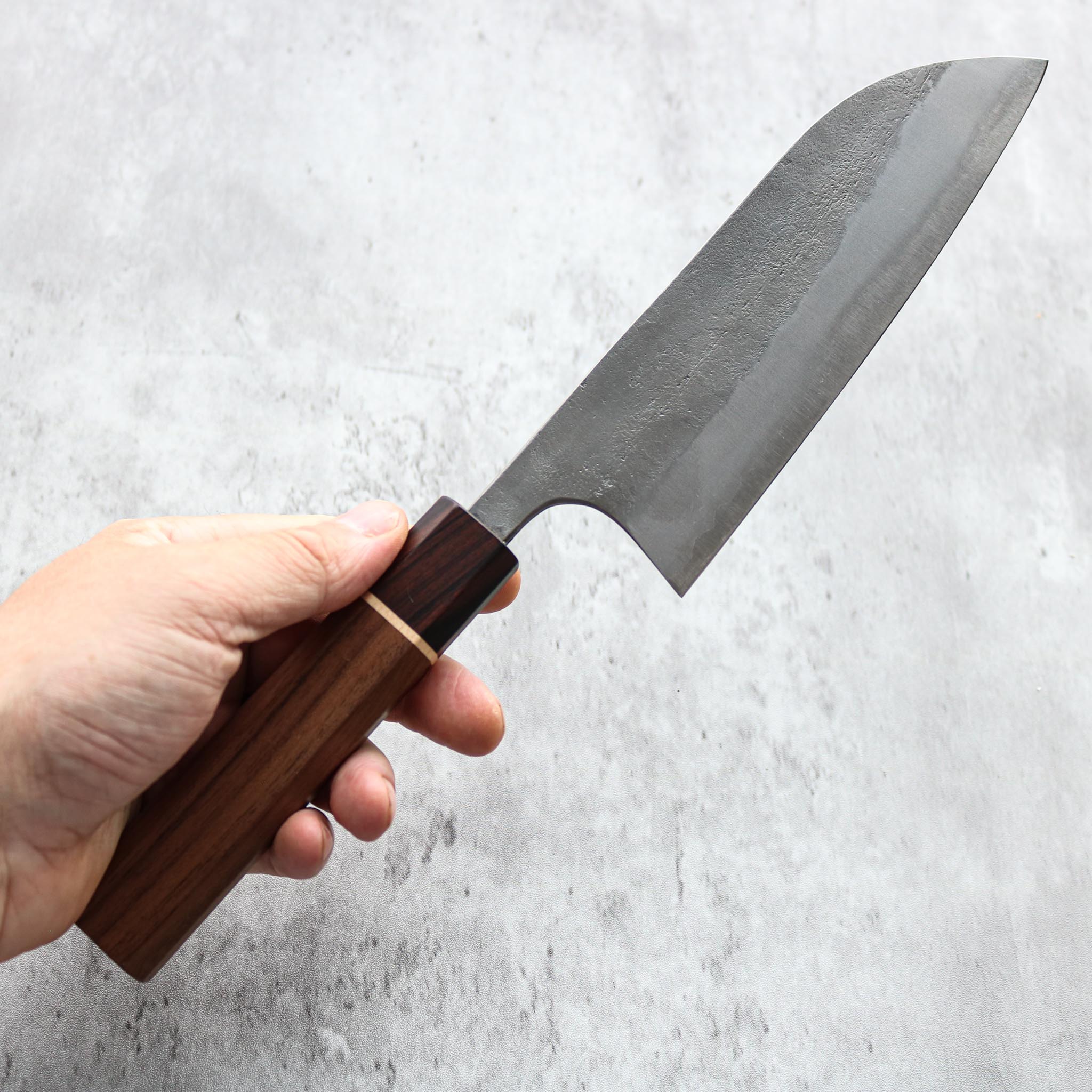
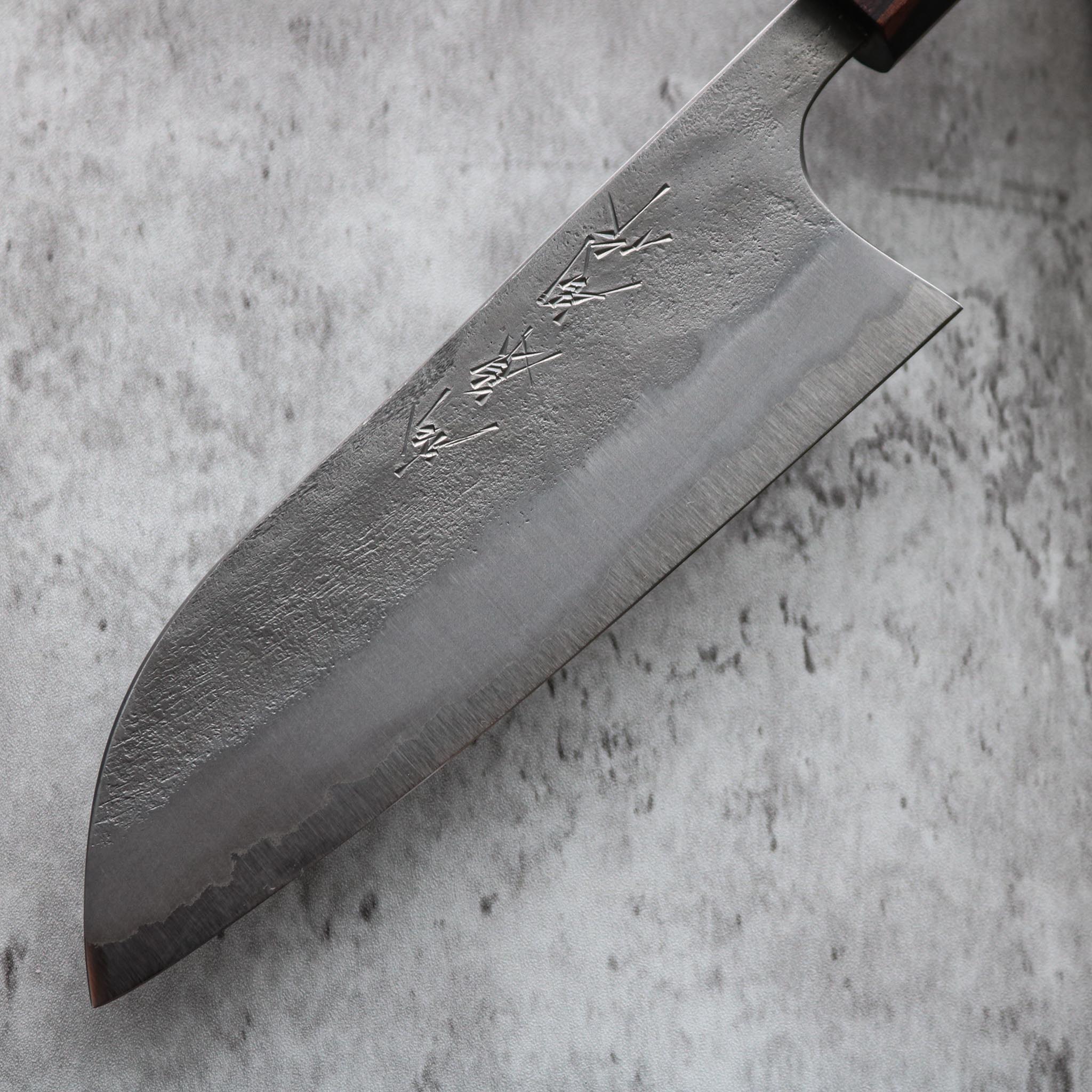
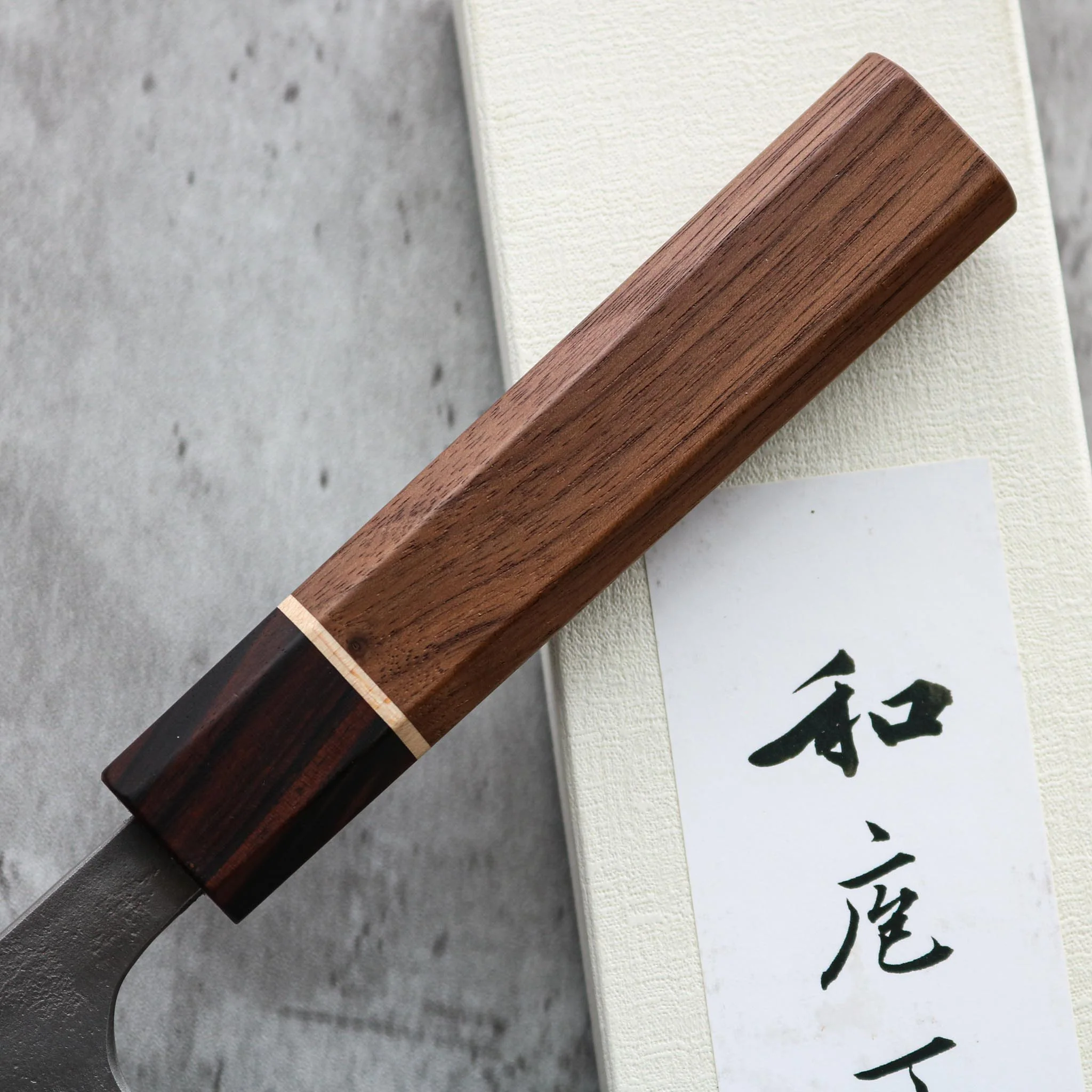
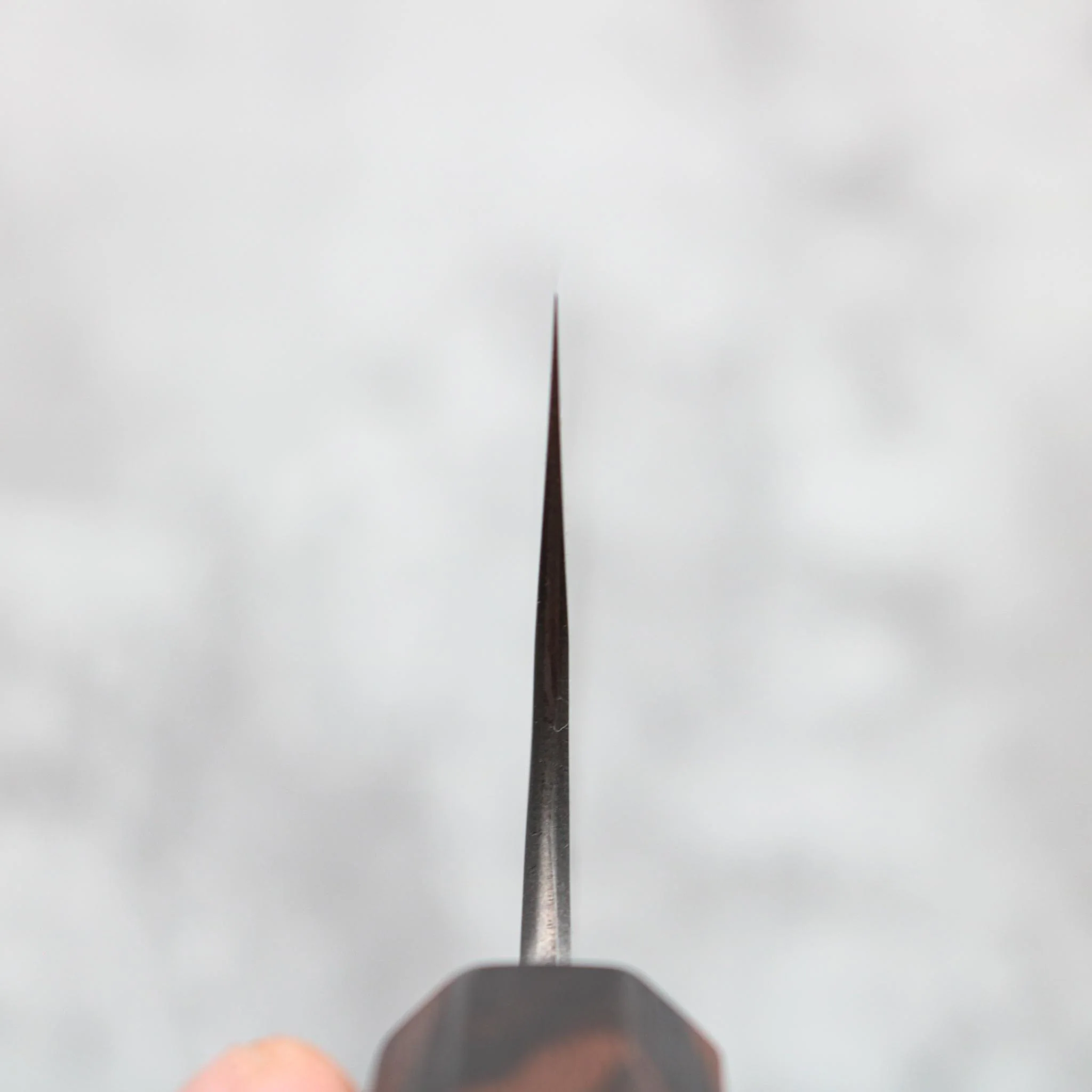
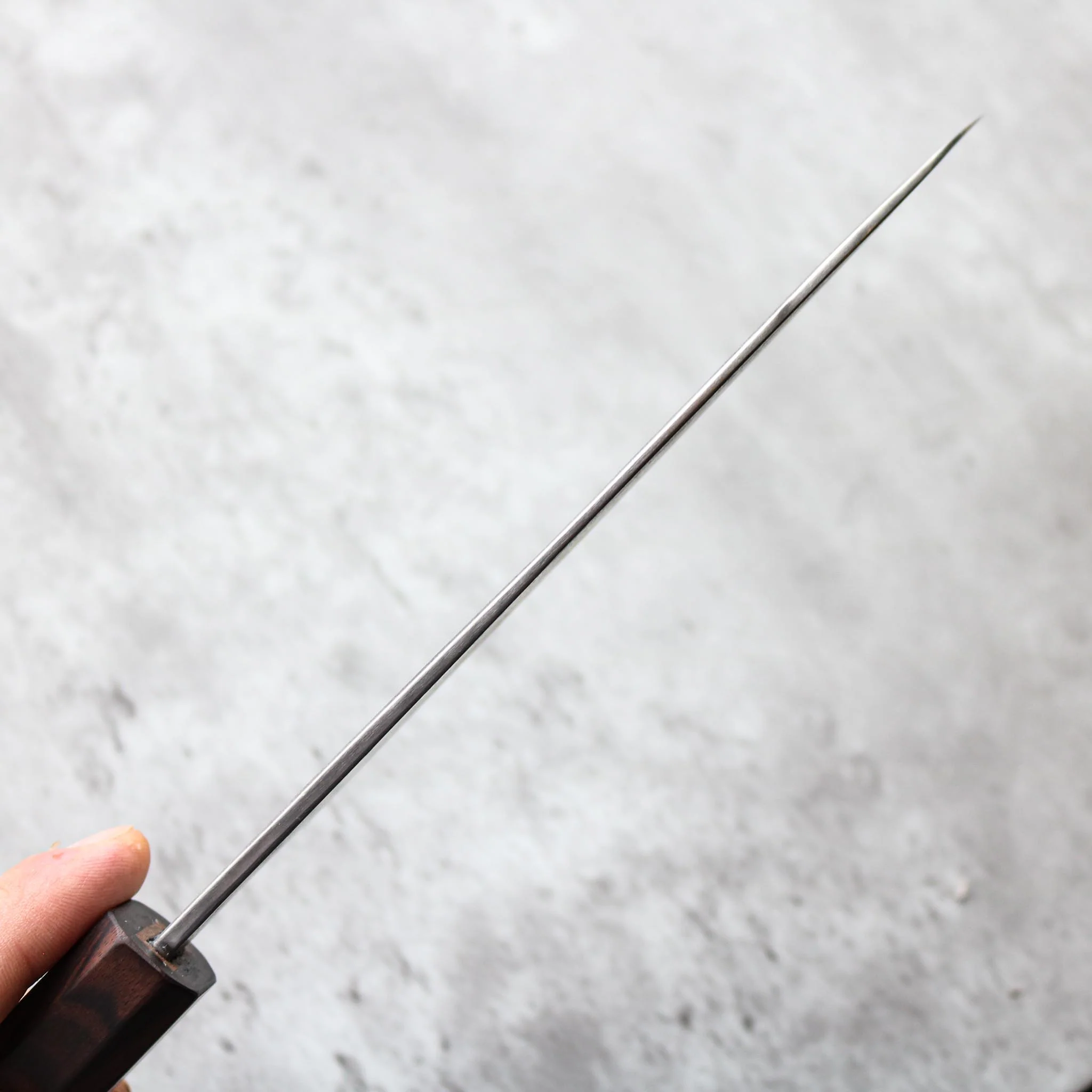
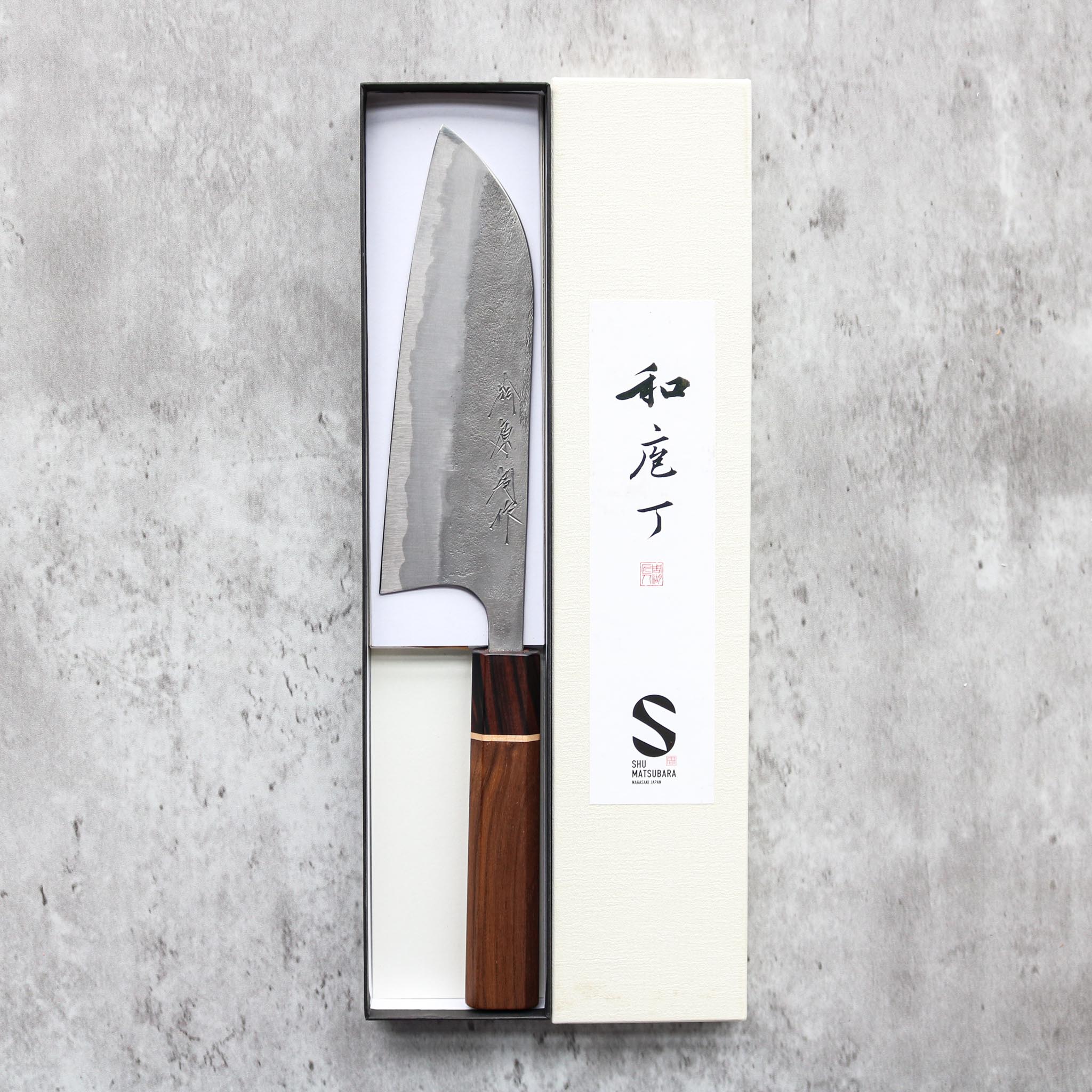
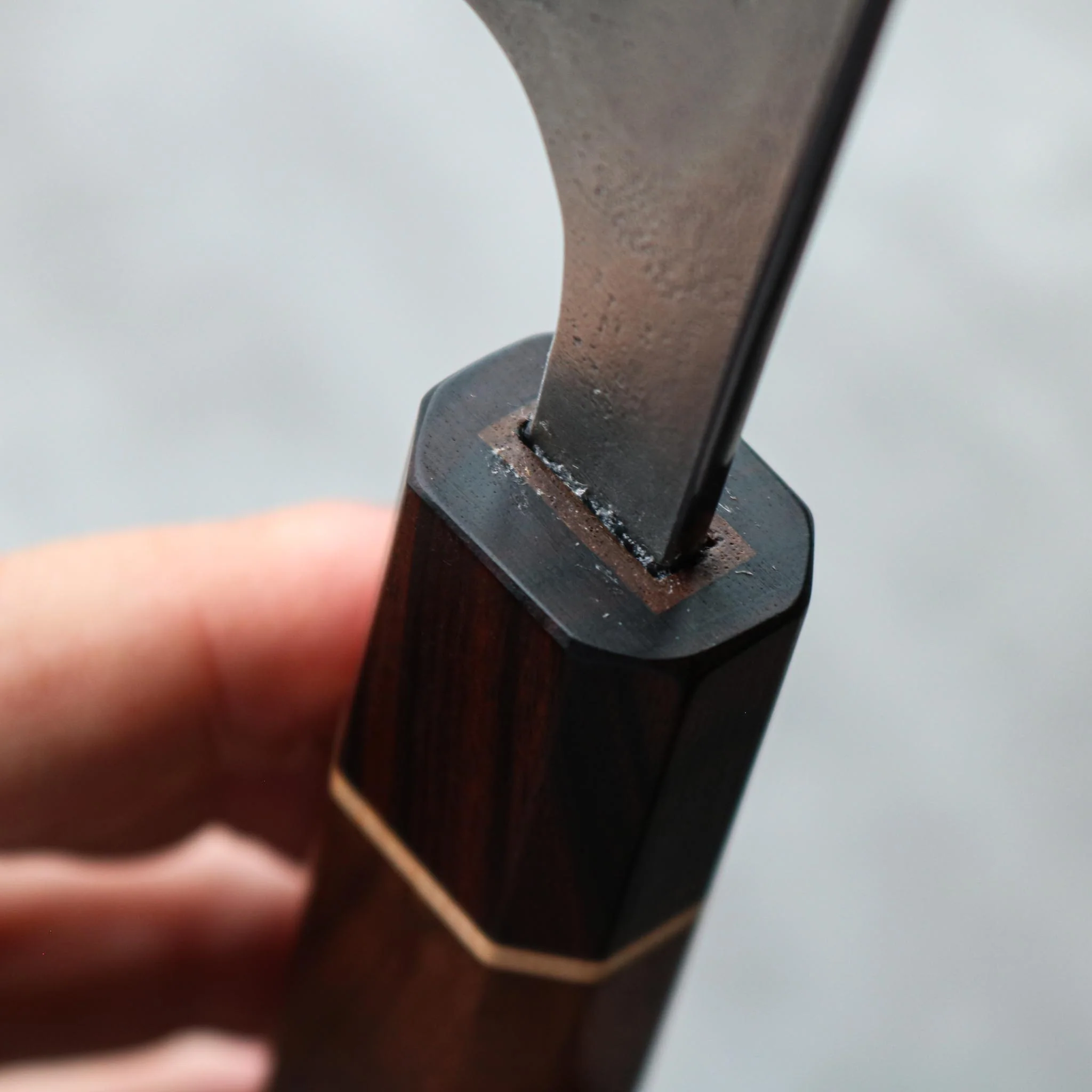
Matsubara Hamono AO#2 Santoku 170 mm
| Blade Length | 170 mm |
| Total Length | 315 mm |
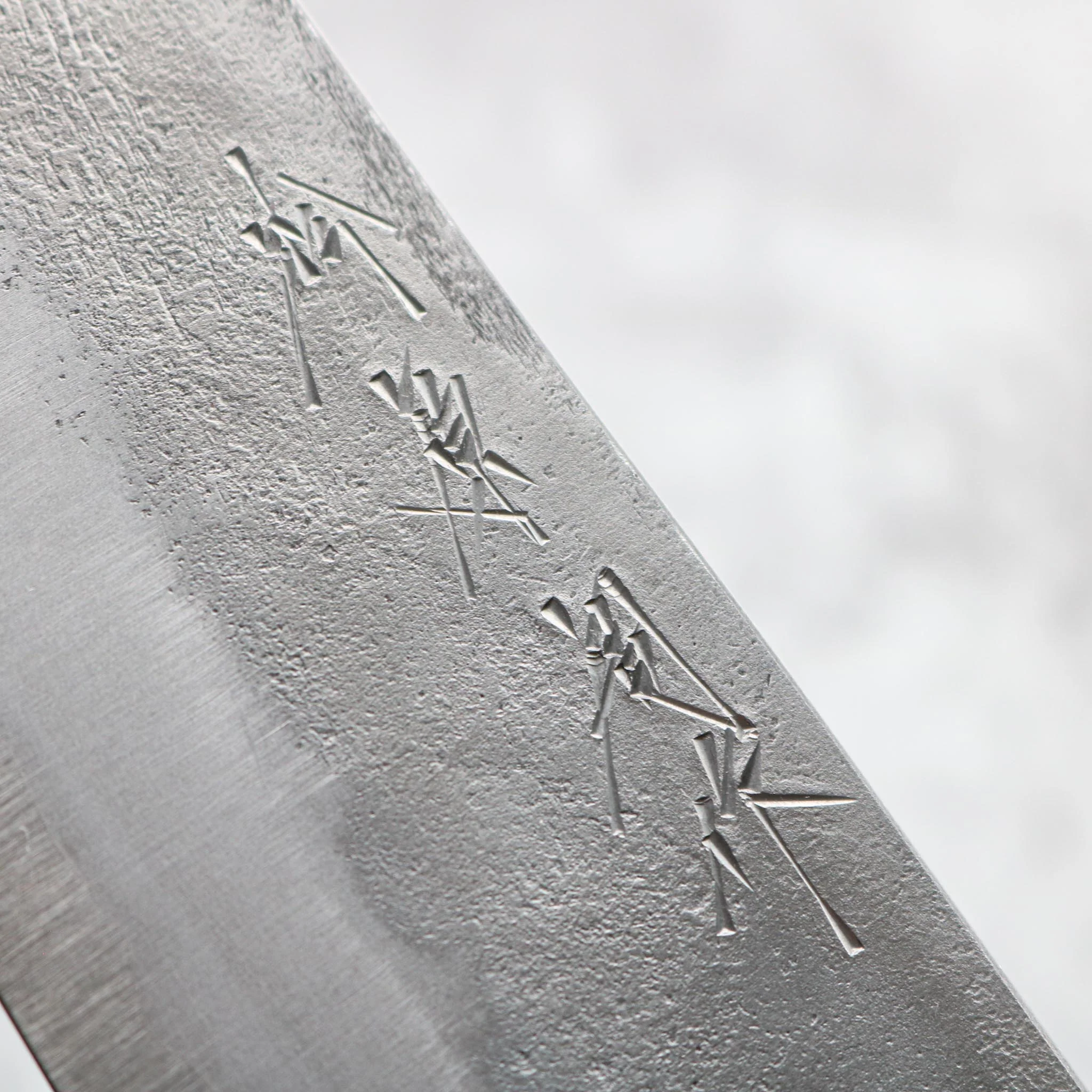
| Steel | Aogami (Blue #2) Stainless Clad |
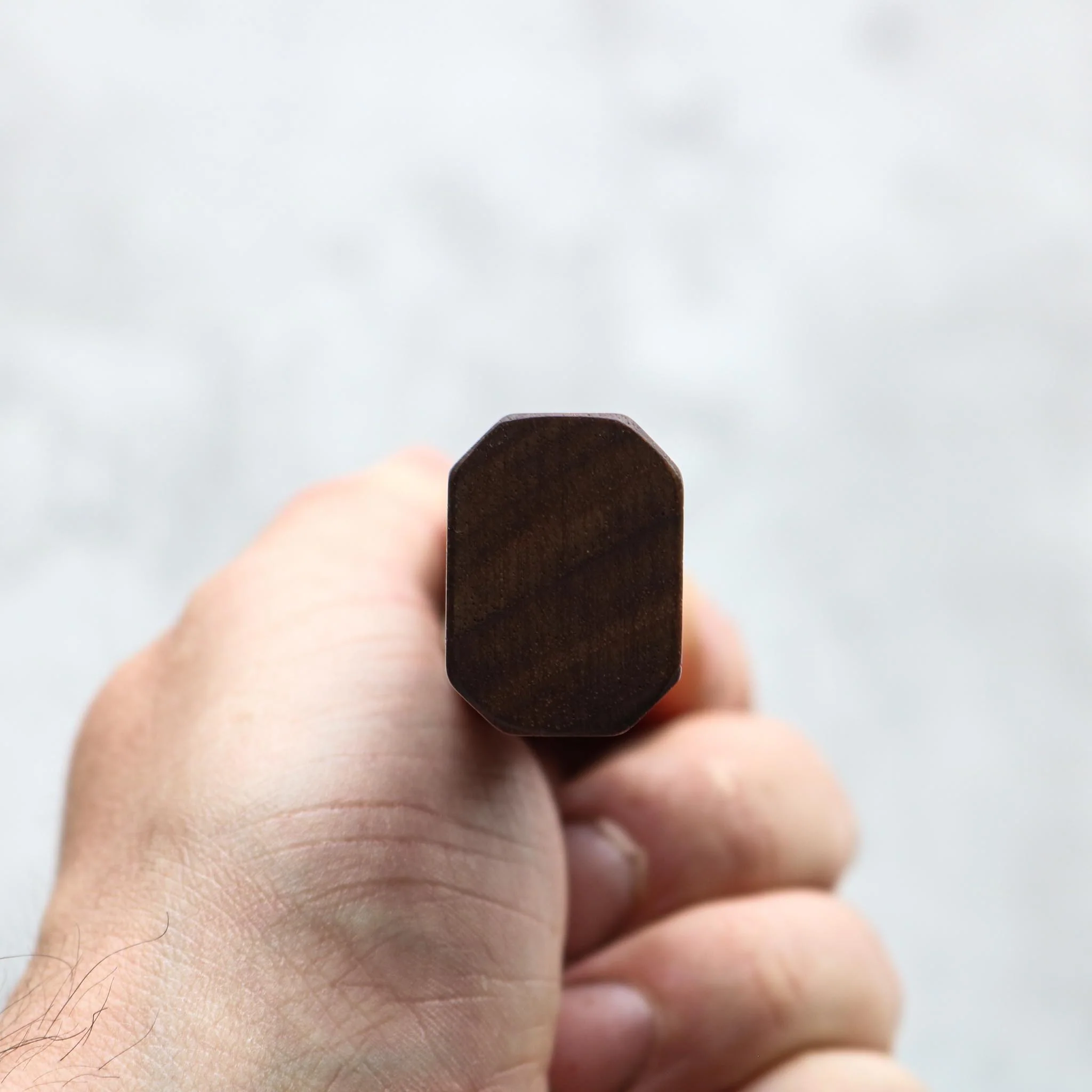
| Handle | Walnut |
| Ferrule | Ebony |
| Rockwell | 63-64 |
| Height Spine to heel | 50 mm |
| Width at Spine | 3.5 mm |
| Weight | 148 grams |
| Bevel | Double (50/50) |
The Blacksmith
Tanaka Kama Kogyo is the current head blacksmith and owner of Matsubara Hamono and he along with his wife, son, mother and two other employees work together to produce their amazing knives. Tanakak-san is a very experience bladesmith and began his journey into knife making at only 20 years on in 1982. He and his team create beautiful and high performing knives that are sought after for their amazing heat treatment and tall blades.
Matsubara Hamono is a long standing knife company that can trace it's roots back as far as 1185 when an ancestor of the shop Master Yukiyasu Namiohira joined the Taira clan as a sword maker. The Taira clan was defeated by the Minamoto clan during the battle of Dannoura but Naminohira-san was able to escape and flee to Hyuga (Modern day Miyazaki prefecture) to continue his craft. During the civil war period at the end of the 15th century to the end of the 16th century, Swords were in high demand and the descendants of Naminohiro-san were busy supplying various Daimo with these blades. It was during this time that one of these descendants moved to Matsubara from Hyuga and in addition to making swords started to make sickles for farmers.
The Shape
The word "Santoku" translates to "three virtues" and refers to slicing, dicing, and chopping, or meat, fish, and vegetables, depending on who you ask. The name highlights the extreme versatility of the shape, which is why we recommend it most to home cooks. Santokus are typically in the 165 mm (6.5 inch) to 180 mm (8 inch) length range. They generally have a gentle curve that sweeps up toward the tip, so they can easily be used with an up and down chopping motion or a rocking motion.
Knife Care (Stainless Clad)
- This knife is made from 3 layers of steel using a technique called Sanmai (Forge welding). It involves laminating a piece of Carbon steel with two pieces of Stainless steel giving the knife all the benefits of the carbon steel (Edge retention, ease of sharpening, cutting feel) and the Ease of Maintenance from Stainless steel. 2-3 millimeters of the carbon steel is exposed at the edge of the knife and is susceptible to rust and discouloration if not properly maintained.
- Simply Wipe the knife with a damp cloth immediately after use to keep it from rusting or discouloring.
- Never put your knife in the Dishwasher. The extreme heat will ruin the wooden handle.
- Highly acidic ingredients (Onions, Tomatoes, Citrus) Will cause rust and oxidation to happen faster, thus the user must ensure the knife is wiped clean immediately after working with such an ingredient.
- Should any rust form it can be removed using a rust eraser or a mixture of Baking soda and water to simply scrub it clean.
Product Information
Product Information
Shipping & Returns
Shipping & Returns
Description
| Blade Length | 170 mm |
| Total Length | 315 mm |
| Steel | Aogami (Blue #2) Stainless Clad |
| Handle | Walnut |
| Ferrule | Ebony |
| Rockwell | 63-64 |
| Height Spine to heel | 50 mm |
| Width at Spine | 3.5 mm |
| Weight | 148 grams |
| Bevel | Double (50/50) |
The Blacksmith
Tanaka Kama Kogyo is the current head blacksmith and owner of Matsubara Hamono and he along with his wife, son, mother and two other employees work together to produce their amazing knives. Tanakak-san is a very experience bladesmith and began his journey into knife making at only 20 years on in 1982. He and his team create beautiful and high performing knives that are sought after for their amazing heat treatment and tall blades.
Matsubara Hamono is a long standing knife company that can trace it's roots back as far as 1185 when an ancestor of the shop Master Yukiyasu Namiohira joined the Taira clan as a sword maker. The Taira clan was defeated by the Minamoto clan during the battle of Dannoura but Naminohira-san was able to escape and flee to Hyuga (Modern day Miyazaki prefecture) to continue his craft. During the civil war period at the end of the 15th century to the end of the 16th century, Swords were in high demand and the descendants of Naminohiro-san were busy supplying various Daimo with these blades. It was during this time that one of these descendants moved to Matsubara from Hyuga and in addition to making swords started to make sickles for farmers.
The Shape
The word "Santoku" translates to "three virtues" and refers to slicing, dicing, and chopping, or meat, fish, and vegetables, depending on who you ask. The name highlights the extreme versatility of the shape, which is why we recommend it most to home cooks. Santokus are typically in the 165 mm (6.5 inch) to 180 mm (8 inch) length range. They generally have a gentle curve that sweeps up toward the tip, so they can easily be used with an up and down chopping motion or a rocking motion.
Knife Care (Stainless Clad)
- This knife is made from 3 layers of steel using a technique called Sanmai (Forge welding). It involves laminating a piece of Carbon steel with two pieces of Stainless steel giving the knife all the benefits of the carbon steel (Edge retention, ease of sharpening, cutting feel) and the Ease of Maintenance from Stainless steel. 2-3 millimeters of the carbon steel is exposed at the edge of the knife and is susceptible to rust and discouloration if not properly maintained.
- Simply Wipe the knife with a damp cloth immediately after use to keep it from rusting or discouloring.
- Never put your knife in the Dishwasher. The extreme heat will ruin the wooden handle.
- Highly acidic ingredients (Onions, Tomatoes, Citrus) Will cause rust and oxidation to happen faster, thus the user must ensure the knife is wiped clean immediately after working with such an ingredient.
- Should any rust form it can be removed using a rust eraser or a mixture of Baking soda and water to simply scrub it clean.