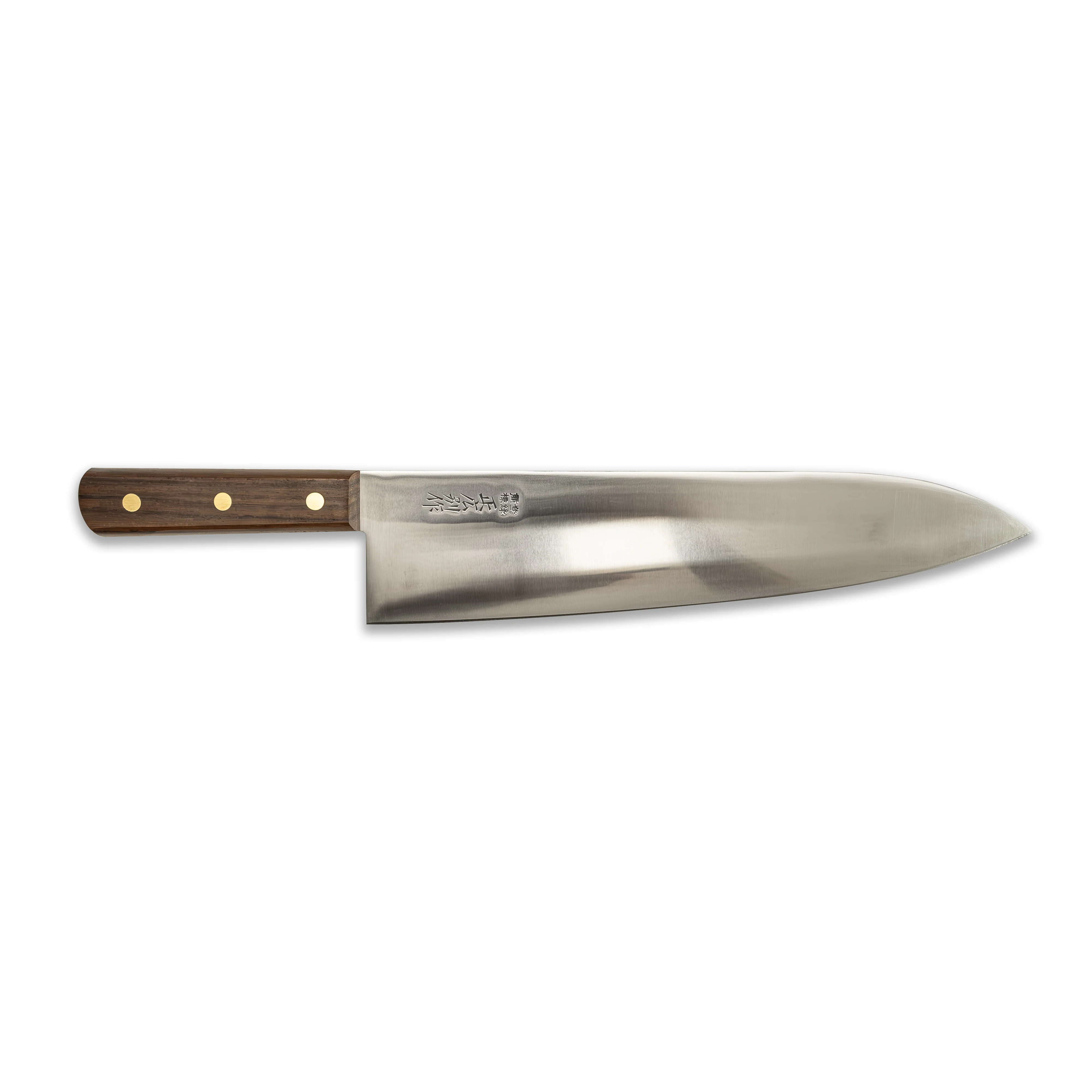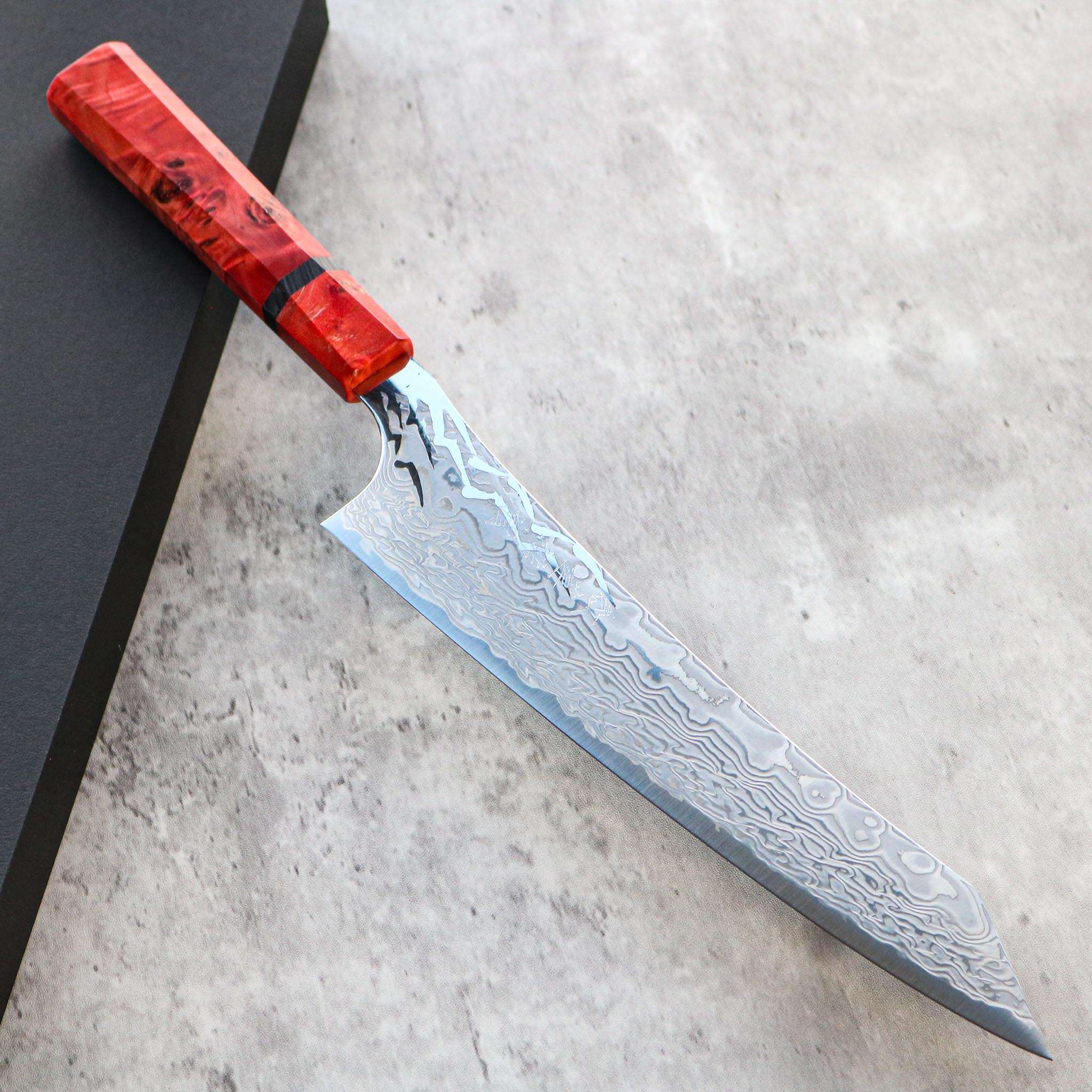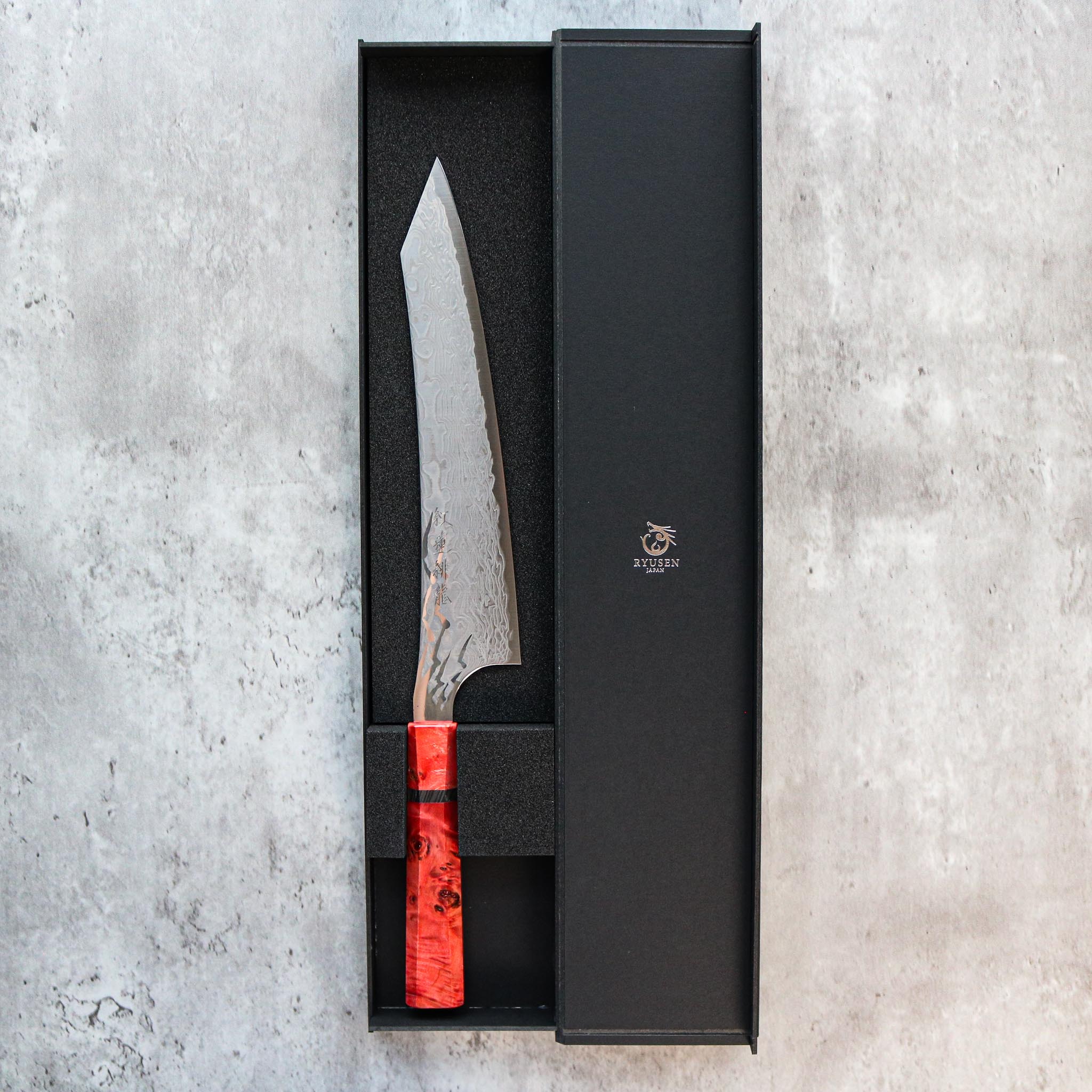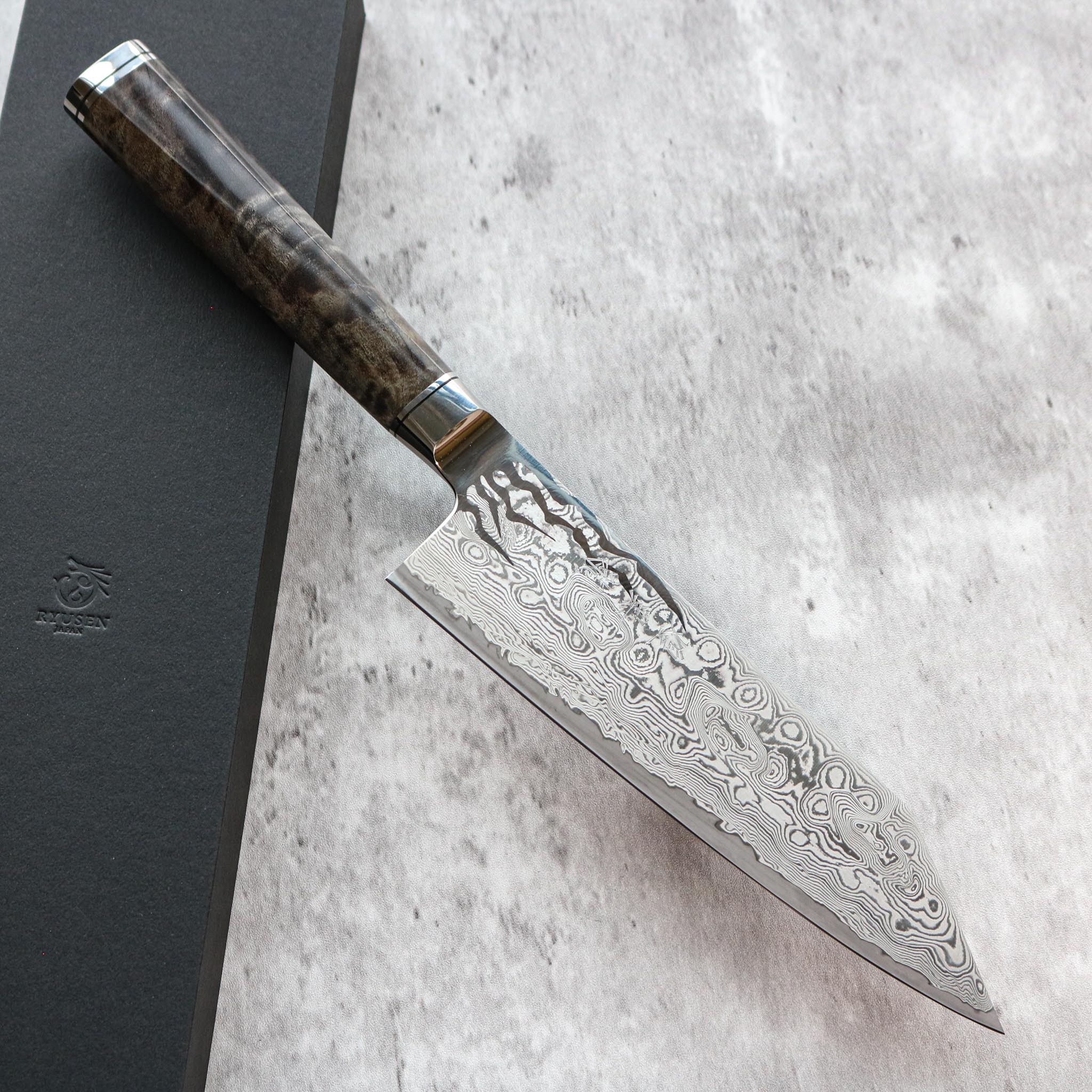
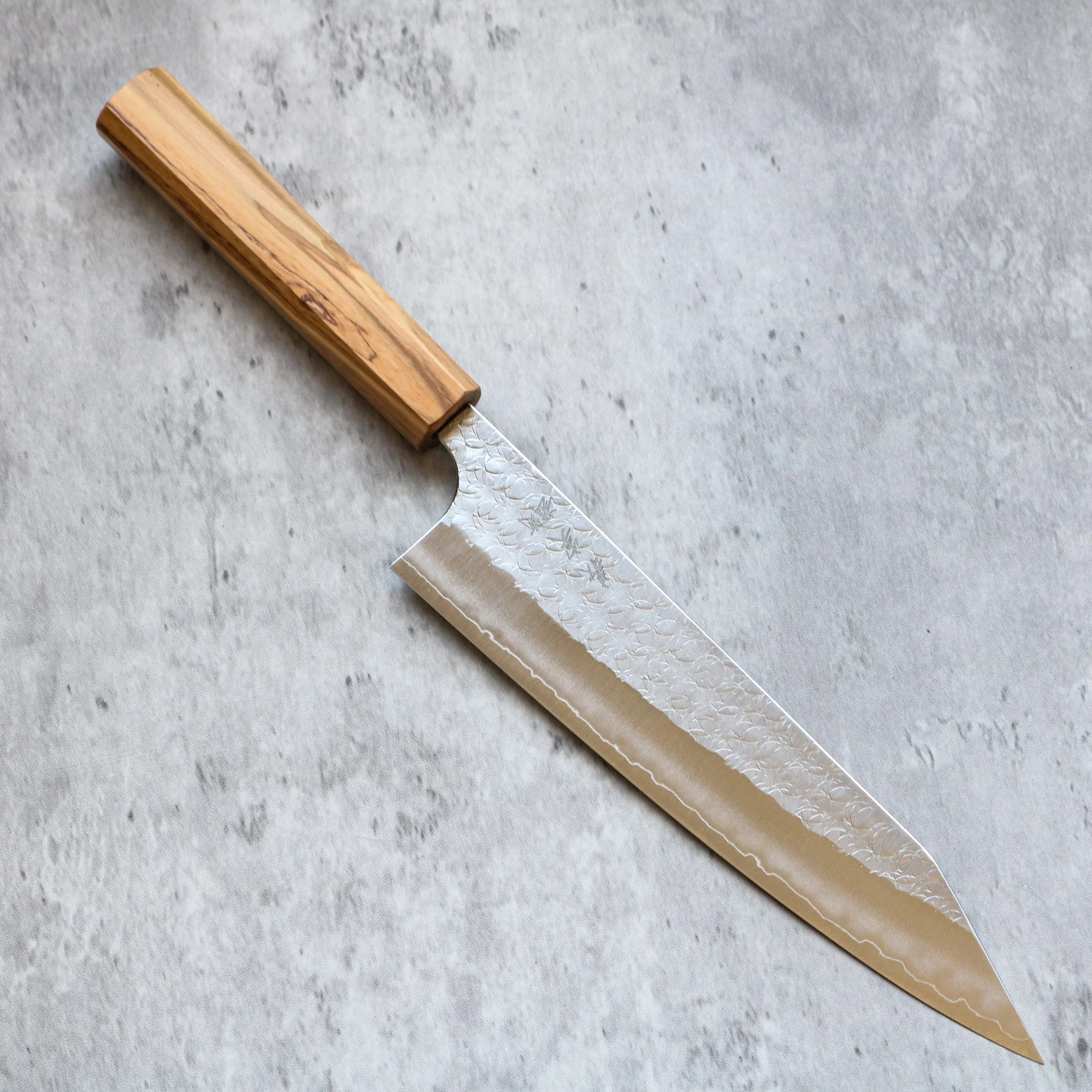
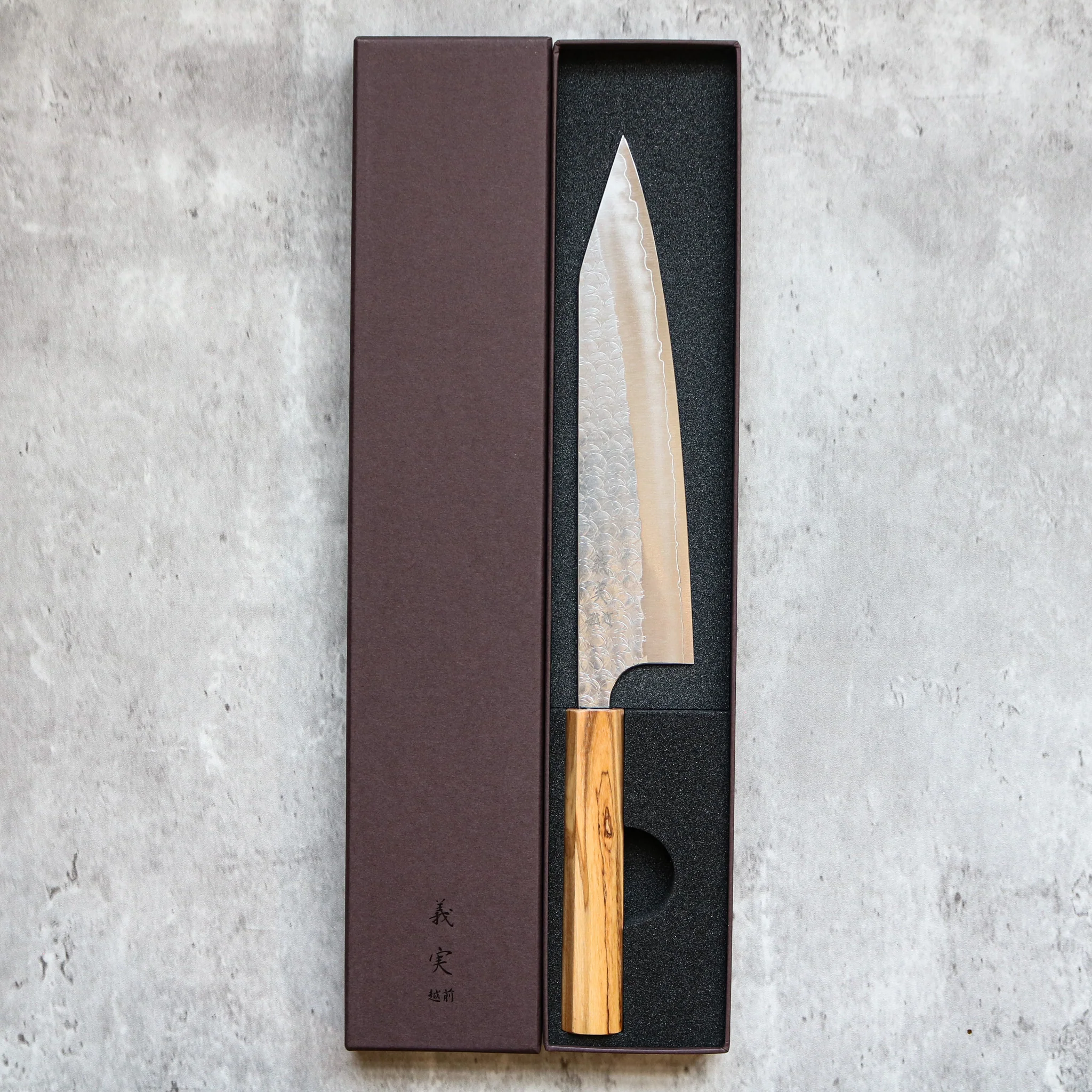
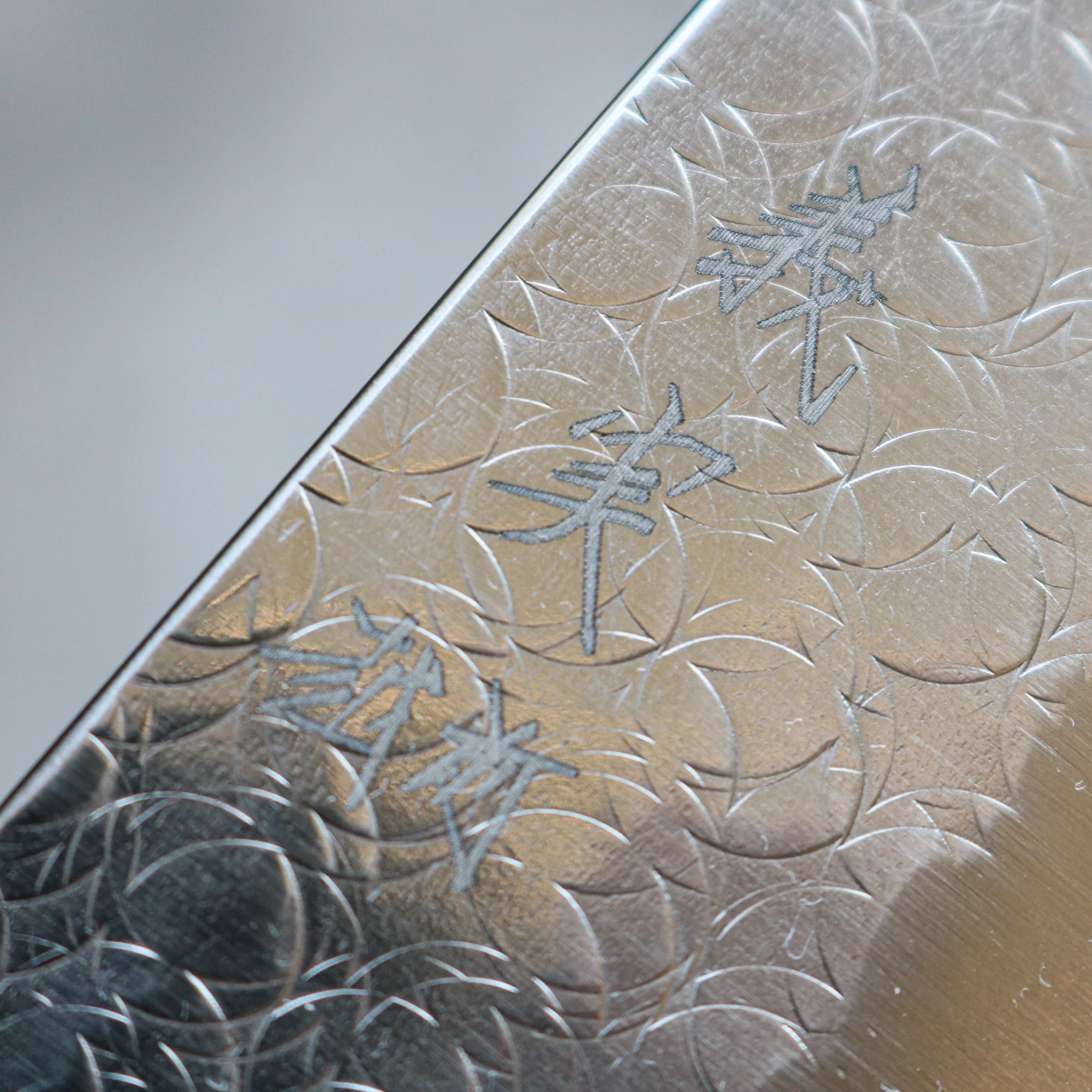
Yoshimi Kato Minamo Kiritsuke Gyuto 210 mm
| Length | 210 mm |
| Total Length | 361 mm |
| Steel | SG2(R2) |
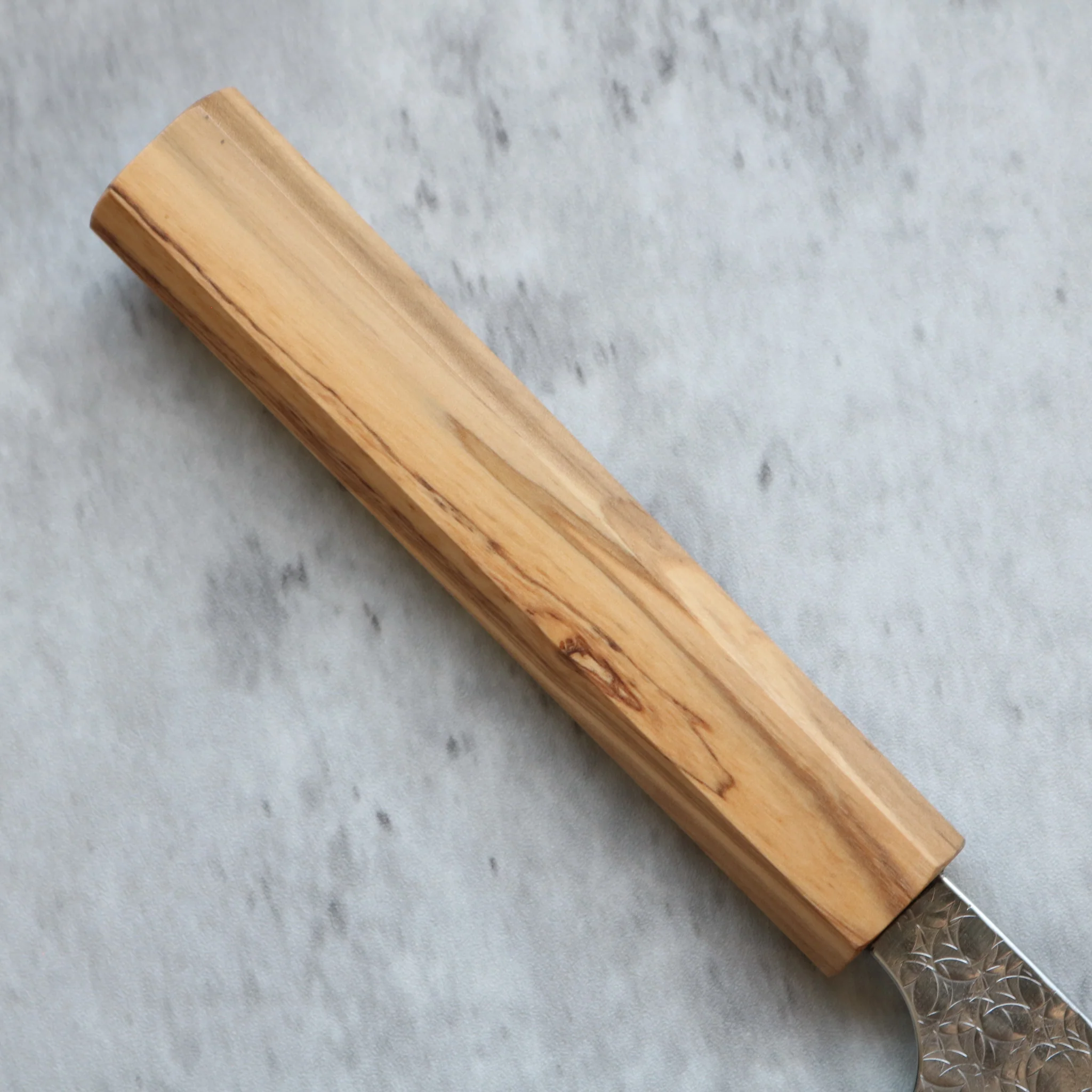
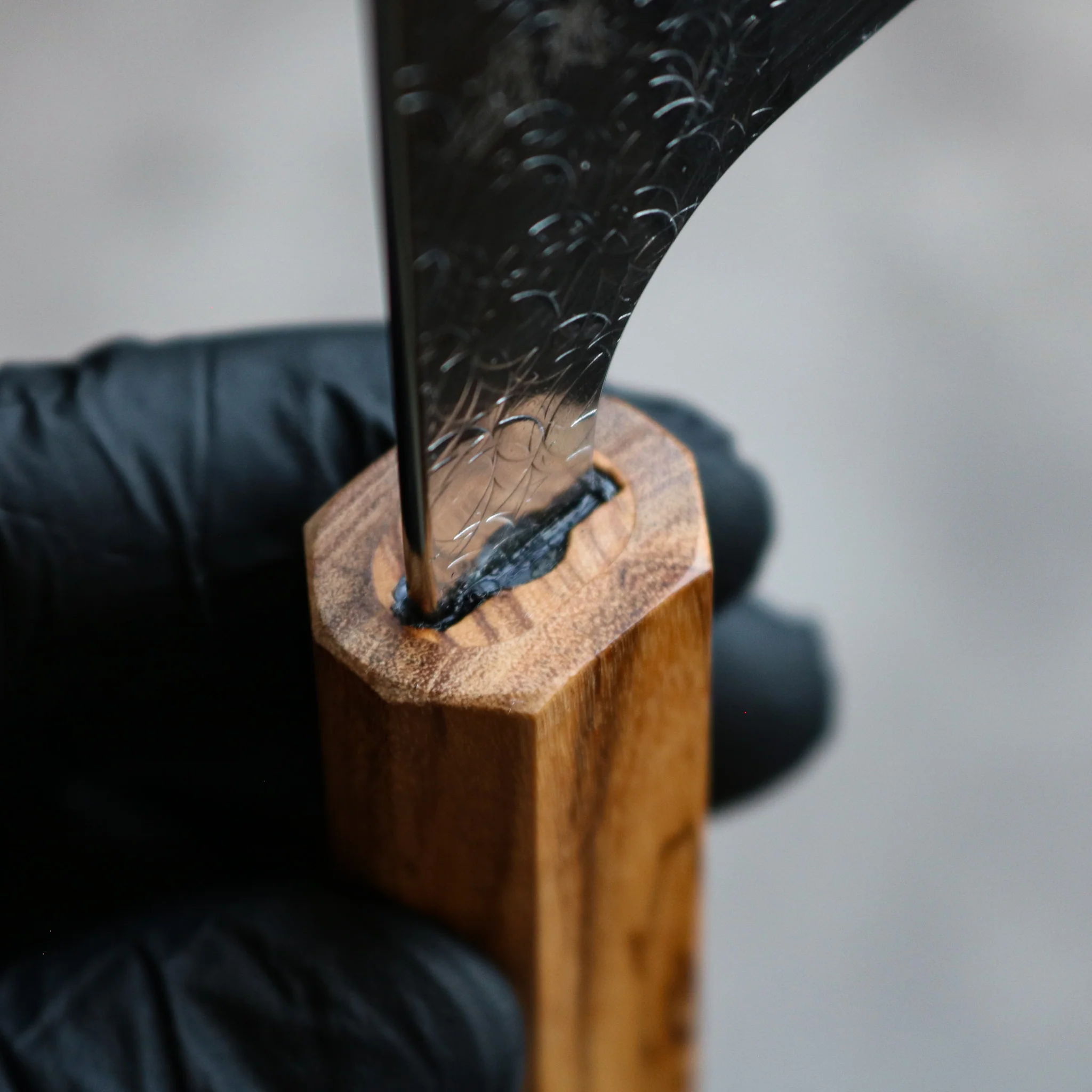
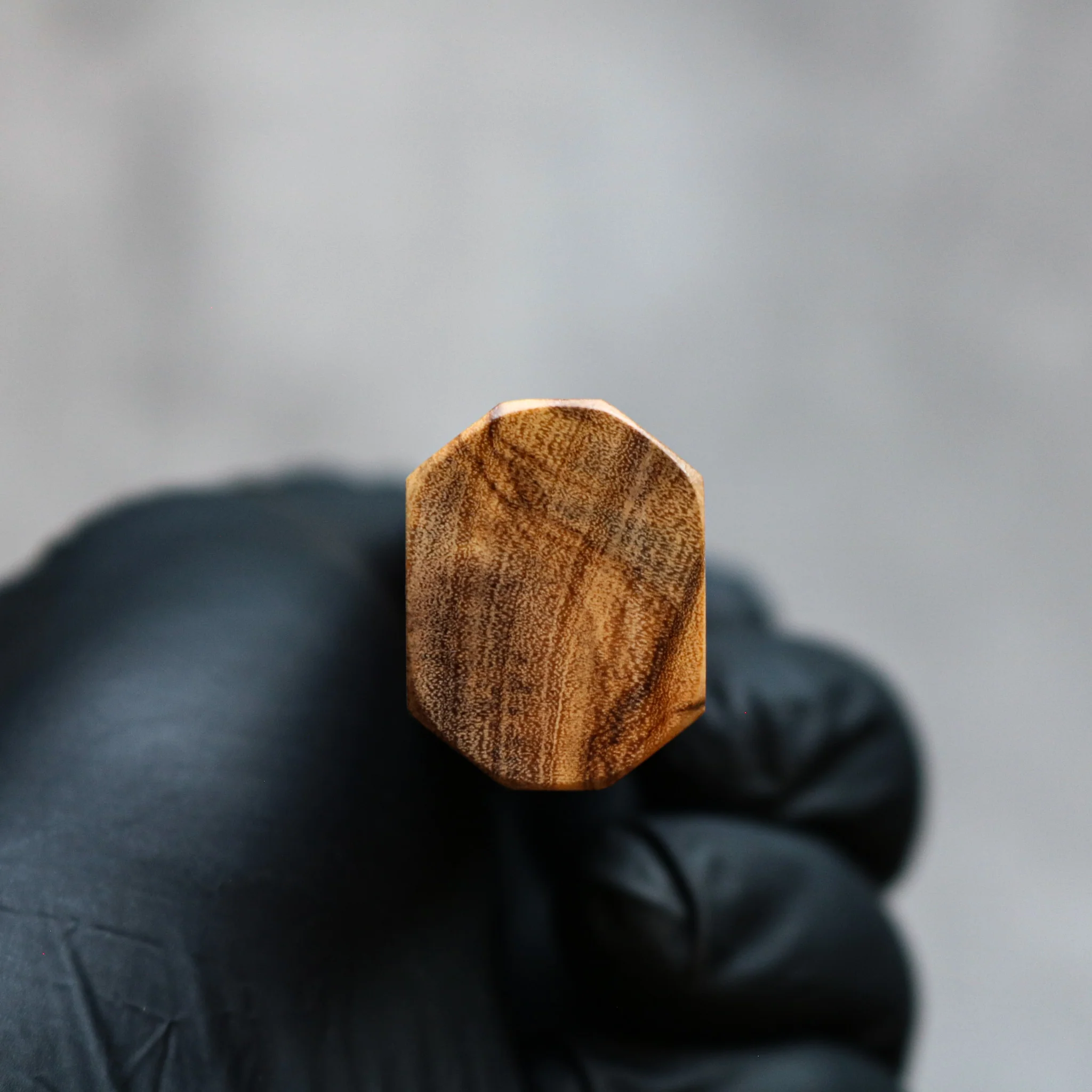
| Handle | Olive Wood |
| Ferrule | N/A |
| Rockwell | 63 |
| Height Spine to heel | 45 mm |
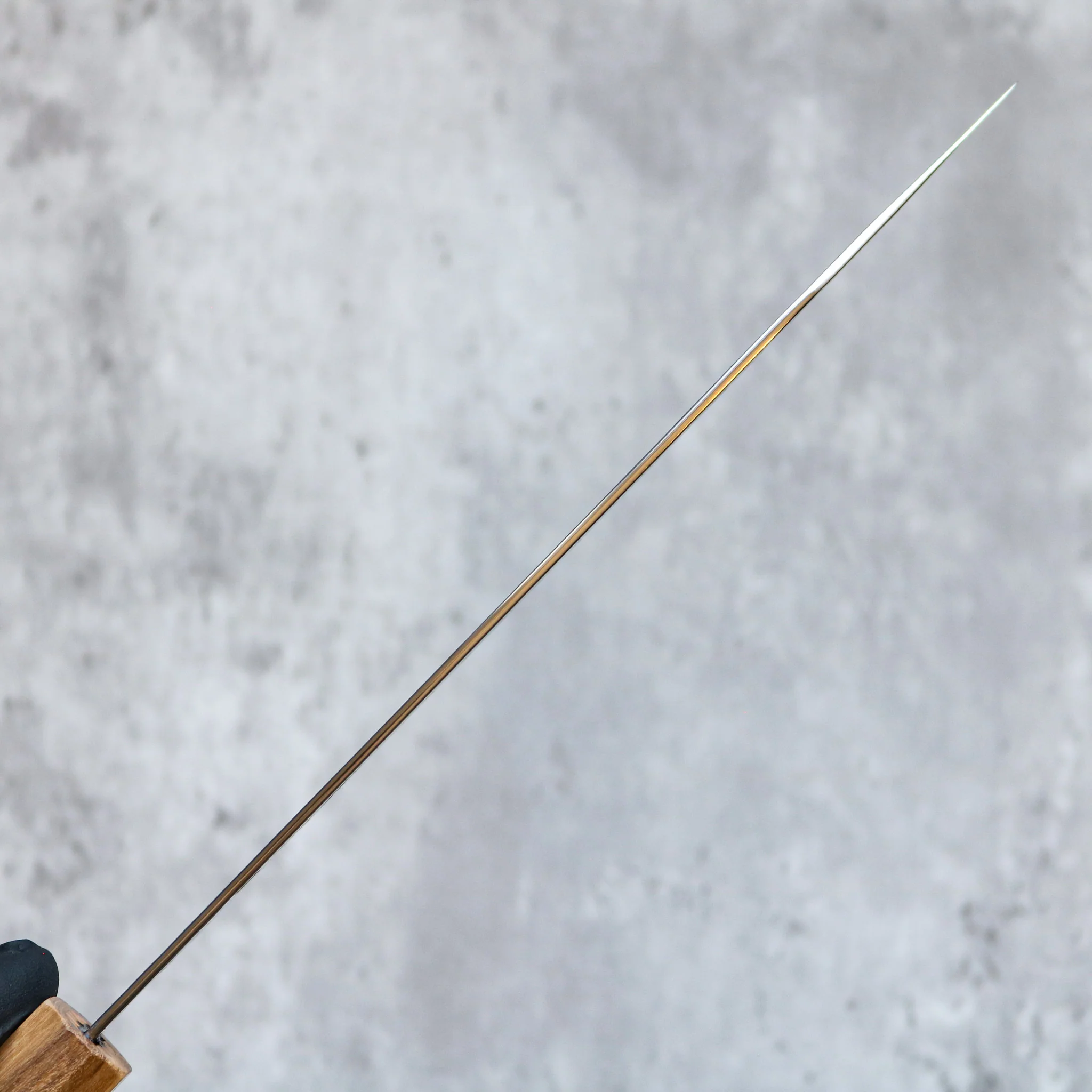
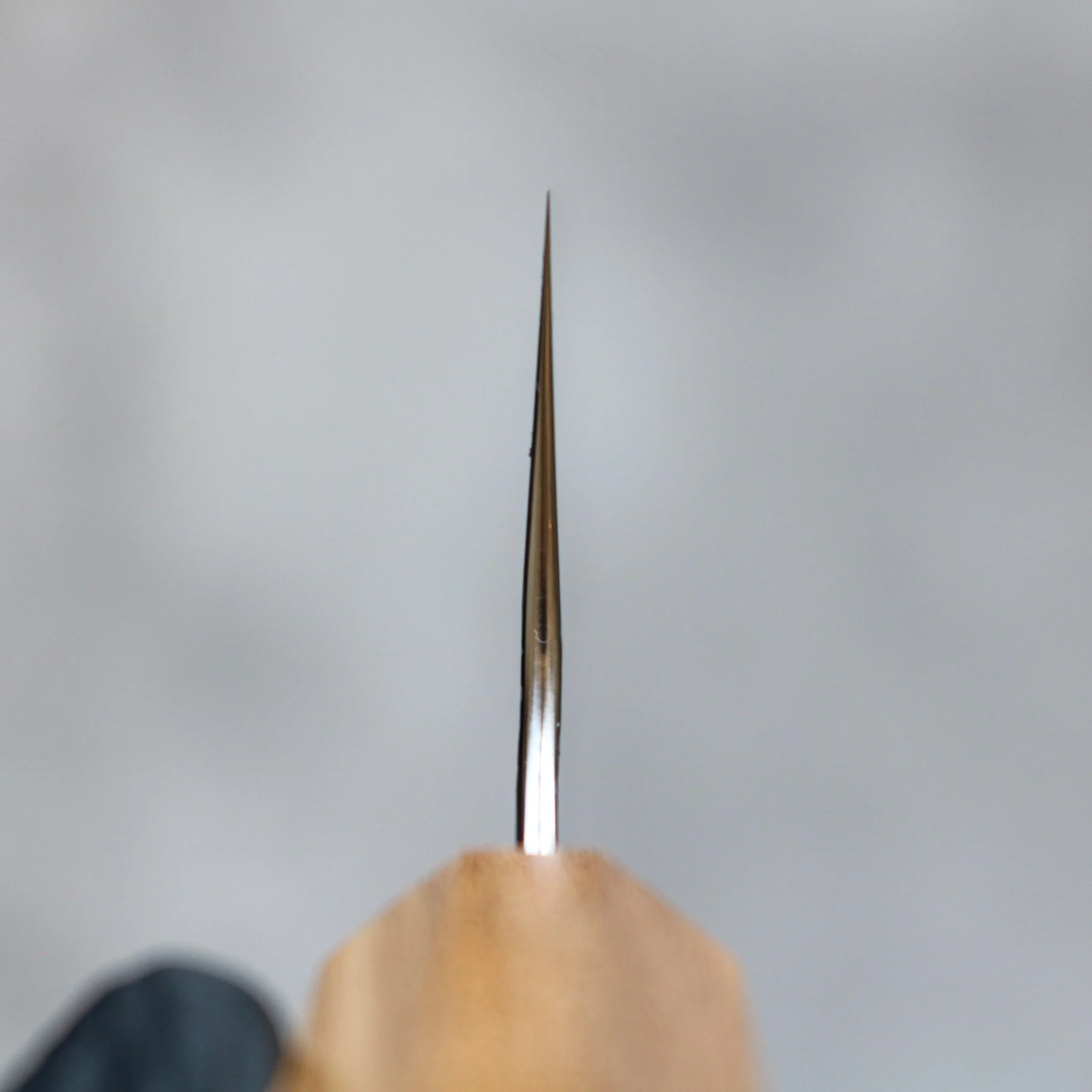
| Width at Spine | 2 mm |
| Weight | 145 g |
| Bevel | Double (50/50) |
Yoshimi Kato
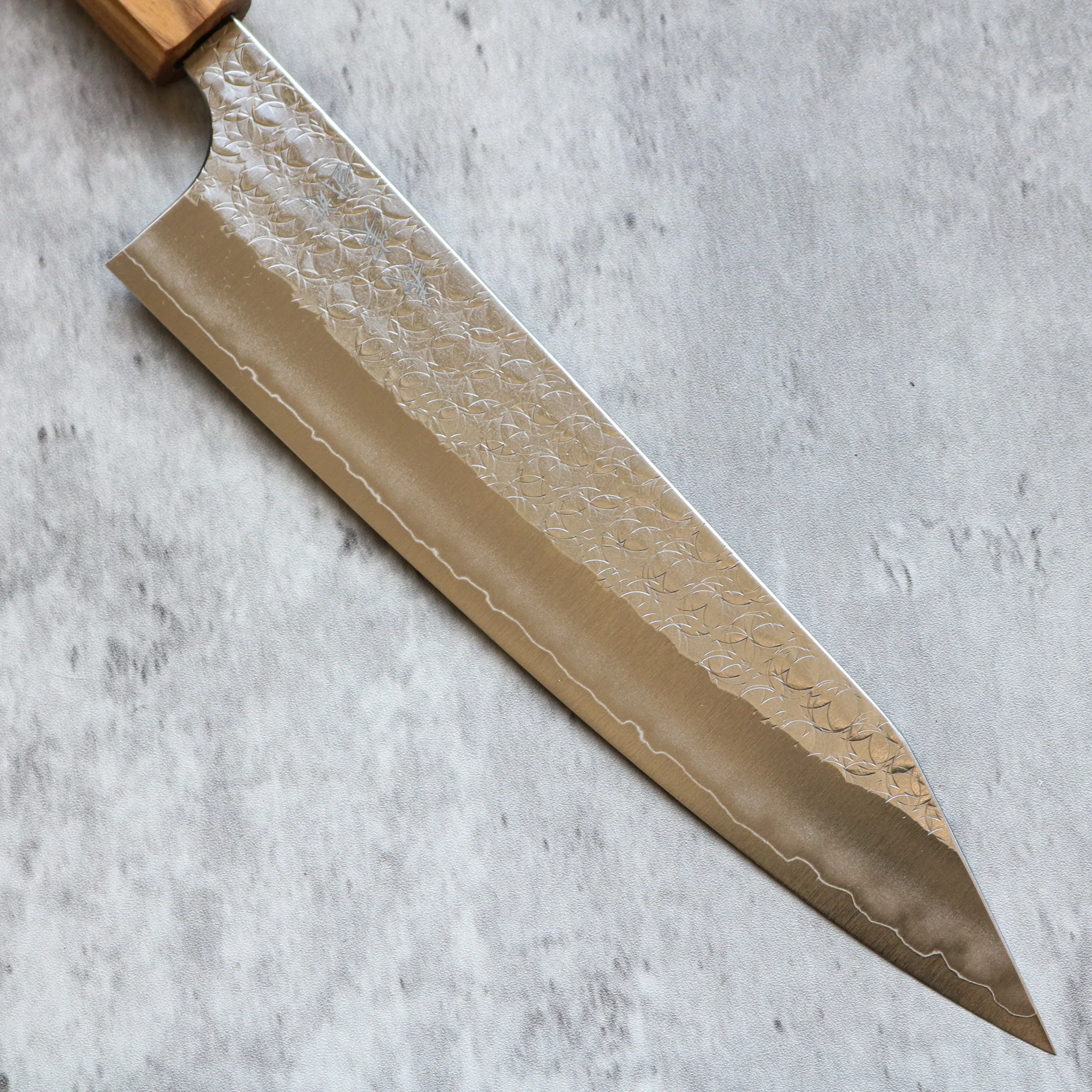
Yoshimi Kato works out of the Takefu Knife village and took over the Family business from his father in-law in 2013. His Father in-law Hiroshi Kato-san started the shop in the late 1960's and was inaugurated as the 4th Chairman of the Takefu Knife village in 1994. Making incredible knives runs in the family obviously and we're very excited to have these incredibly sharp knives in our shop. They have one of the most beautiful tsuchime patterns we have ever seen and are sharpened by famous knife sharpener Makoto Kurosaki; brother of one of our favorite knifemakers Yu Kurosaki.
Takefu Knife Village
The Takefu Knife Village is a cooperative workshop in the Echizen region of Japan. It is the home to a long list of blacksmiths that we work with and many young and upcoming apprentices learning the trade. The area has a 700 year long history of smithing with roots in agricultural tools turned cutlery powerhouse.
The Knife
The Kiritsuke is very similar to the Gyuto, but has a flatter profile (less curvy blade) and the more aggressive "reverse tanto" or "k-tip”. Its design helps it excel at slicing tasks and chopping vegetables large and small. It is generally used in an up and down chopping motion, so if you prefer to rock chop, a Gyuto may be a better choice. Single beveled versions are said to be the most versatile knife shape (though the Gyuto gives it a run for its money). Double beveled versions are more user friendly.
Knife Care (Stainless Steel)
- Although this knife is made from stainless steel we do still encourage our customers to keep their knives as dry and clean as possible.
- NO DISHWASHER - the high heat will ruin the wooden handle.
- Wash and dry by hand using regular dish soap and warm water using a none abrasive sponge or cloth.
- Ensure the knife is dry before being put away for storage and ensure the edge of the knife is protected to avoid any unnecessary dulling.
- Avoid Bones, Frozen foods, nuts and hard candies or anything other than fruits, vegetables and proteins.
Original: $463.72
-65%$463.72
$162.30Product Information
Product Information
Shipping & Returns
Shipping & Returns
Description
| Length | 210 mm |
| Total Length | 361 mm |
| Steel | SG2(R2) |
| Handle | Olive Wood |
| Ferrule | N/A |
| Rockwell | 63 |
| Height Spine to heel | 45 mm |
| Width at Spine | 2 mm |
| Weight | 145 g |
| Bevel | Double (50/50) |
Yoshimi Kato
Yoshimi Kato works out of the Takefu Knife village and took over the Family business from his father in-law in 2013. His Father in-law Hiroshi Kato-san started the shop in the late 1960's and was inaugurated as the 4th Chairman of the Takefu Knife village in 1994. Making incredible knives runs in the family obviously and we're very excited to have these incredibly sharp knives in our shop. They have one of the most beautiful tsuchime patterns we have ever seen and are sharpened by famous knife sharpener Makoto Kurosaki; brother of one of our favorite knifemakers Yu Kurosaki.
Takefu Knife Village
The Takefu Knife Village is a cooperative workshop in the Echizen region of Japan. It is the home to a long list of blacksmiths that we work with and many young and upcoming apprentices learning the trade. The area has a 700 year long history of smithing with roots in agricultural tools turned cutlery powerhouse.
The Knife
The Kiritsuke is very similar to the Gyuto, but has a flatter profile (less curvy blade) and the more aggressive "reverse tanto" or "k-tip”. Its design helps it excel at slicing tasks and chopping vegetables large and small. It is generally used in an up and down chopping motion, so if you prefer to rock chop, a Gyuto may be a better choice. Single beveled versions are said to be the most versatile knife shape (though the Gyuto gives it a run for its money). Double beveled versions are more user friendly.
Knife Care (Stainless Steel)
- Although this knife is made from stainless steel we do still encourage our customers to keep their knives as dry and clean as possible.
- NO DISHWASHER - the high heat will ruin the wooden handle.
- Wash and dry by hand using regular dish soap and warm water using a none abrasive sponge or cloth.
- Ensure the knife is dry before being put away for storage and ensure the edge of the knife is protected to avoid any unnecessary dulling.
- Avoid Bones, Frozen foods, nuts and hard candies or anything other than fruits, vegetables and proteins.